language
En Ku Ar

Image Title calendar2024-03-28

PRELIMINARY REPORT OF THE CHARMO (JARMO) PREHISTORIC INVESTIGATIONS, 2022

The archaeological mission from the University of Tsukuba began to investigate the Neolithic sites in the Iraqi-Kurdistan region in 2014. The purpose of our investigations was to reconsider the issue of Neolithization in Iraqi-Kurdistan, where research began in the 1940s and 50s and was stalled by political issues starting in the 1960s. With the full support of the Directorate General of Cultural Heritage of the Ministry of Culture of the Kurdistan Regional Government and the Slemani Department of Cultural Heritage, we first began our research at the Qalat Said Ahmadan site, located in the Pshdar Plain. We were able to identify the cultural deposits of the end of the Pre-Pottery Neolithic period, those of the Hassuna, Samarra, Halaf, Ubaid, and Iron Age, and have clarified the nature of the Neolithic site located at the edge of the fan deposits [Tsuneki et al. 2015, 2016, 2019].

Image Title calendar2024-01-28

Complex local settlement in Zagros Mountains before the Assyrians expanded into this region

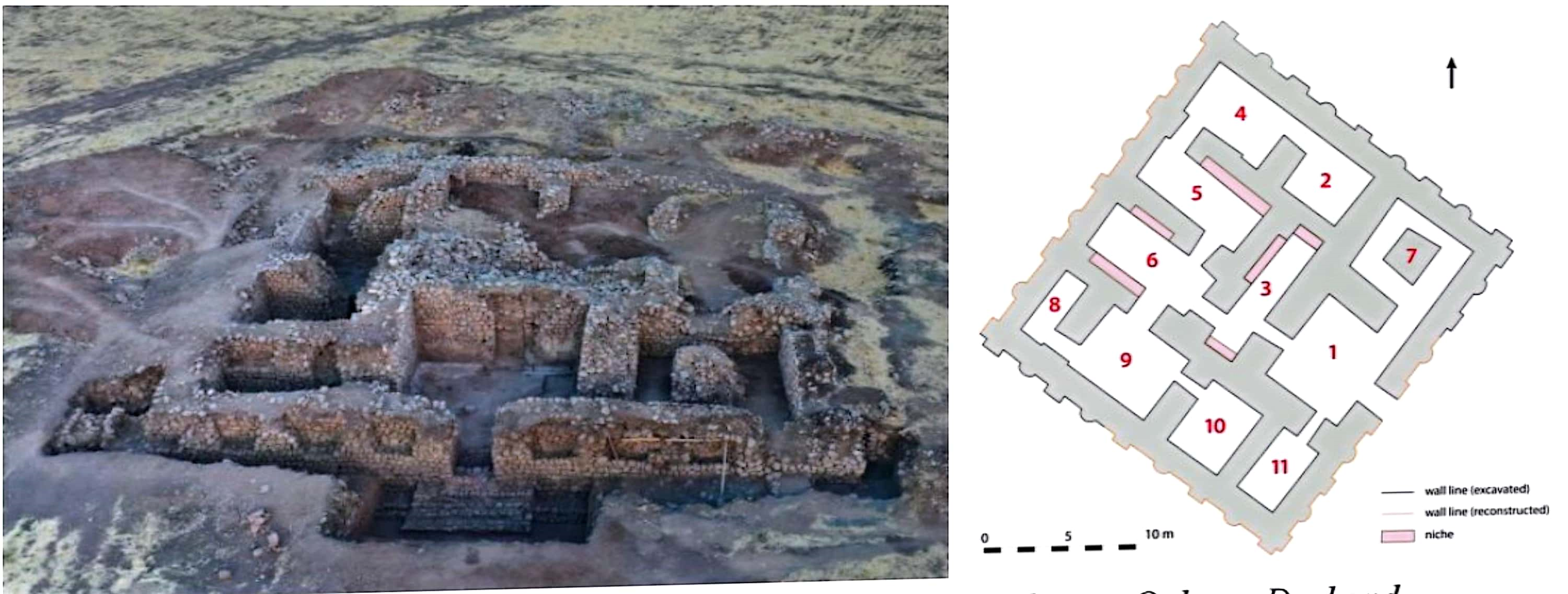
About 5 km south of the district town of Qaladze, in the Peshdar Plain on the eastern bank of the Little Zab, lie the two archaeological sites of Qalat-i Dinka and Gird-i Bazar.

Image Title calendar2024-01-29

Late Prehistoric Investigations at Shakar Tepe, the Shahrizor Plain, Iraqi Kurdistan: Preliminary Results of the First Season (2019)

Grdi-Shakar Tapa on the Sharazor plain in Iraq's Kurdistan Region has revealed a new episode of the Neolithic discovery Shakar Tapa has been known as a conspicuous archaeological site in the south of the Shahrazor Plain since the mid-20th century. It has an oval plan consisting of a low northeastern mound and a high conical southwestern mound with a flat top. The Darband-i Khan Dam Lake is adjacent to the north of the site and its water occasionally reaches the skirt of the mound, causing crucial erosion of the northern edge of the mound. Many archaeological materials were collected on the surface of Shakar Tapa in the past. Although most of them can be dated to the historical ages, such as the Early-to-Middle Bronze Age, the Iron Age, and the Parthian-Sasanian Period, some artefacts were certainly dated to the prehistoric period. In 2019 a Japanese archaeological team (directed by Takahiro Odaka, Kanazawa University) started the excavations of Shakar Tapa to investigate its late prehistoric occupation. The first operation of a step trench was set at the northwestern skirt of the high mound and yielded the Ubaid deposit and the Late Neolithic stratigraphic sequence covering ca. 6400-6000 BC. Virgin soil was reached at the northwestern end of the trench about 5 m below the highest level of this trench. The second season carried out in 2023 revealed the younger Late Chalcolithic deposit at the area near the trench in 2019. In addition, a few low satellite mounds were identified west of the main mound and another late prehistoric deposit was uncovered at one of them.

Archaeological work in the region is concentrated in Slemani

Article Name

The international university and institute that currently have agreement to work and excavation in Slemani Province 

Directorate of Antiquities and Heritage of Slemani, currently has many contracts and partnerships with several foreign universities and institutes for (surveying, excavation, reconstruction and maintenance….. etc) in Slemani province.
All contracts are approved by the General Directorate of Antiquities and Heritage in the Kurdistan Region and its ministry in the government.
The content of the contracts will be drafted in the Directorate of Antiquities and Heritage of Slemani and reviewed by the section of (archaeologist and heritage) and legal section of the General Directorate of Antiquities and Heritage.
The content of the contracts are based on law no.(5) of 2021 on the management and protection of Antiquities and heritage of the Kurdistan Region.
Some of the points of all contracts are derived from the law and fixed, while other points vary according to the type of archaeological sites, periods, type of works whether surveying ,excavation  or restoration…. etc.


1. University of Reading, UK. (Grdi-Bestanswr) and (Chami Zawi)
2. University of Munich, Germany and New York, America. (Grdi-Rostam)
3. University of Chubu, Japan. (Grdi-Yasin Tapa)
4. University of Tsukuba, Japan. (Gudi Charmo)
5. Institute of Liberal Art and Science, Kanazawa University, Japan. (Grdi-Shakr Tapa and Shekh Maeruf)
6. Institute for Western Asian Archaeologies, Frei Universität Berlin, Germany. (Grdi-Begum)
7. Universität Frankfurt am Main, Germany. (Grdi-Kazhaw and Qlerkh)
8. Universidad de Coimbra, Portuguese. (Grdi-Kani Shai)
9. Sapienza - Università di Roma, Italian. (Grdi-Yasen Tapa)
10. National museum of ASIAN ART, Smithsonian, America. (Grdi-Ban Qala)
11. University Paris I, French. (Grdi-Kunara)
12. CNRS, Paris I, French, (Ashkawti Sarsyan, Rostam Akha).
13. University Heidelberg, Germany, (Mirquli and Rabana project)
14. University of Liverpool UK, (Ashkawta Rash and Pala Gawra)
15. University of Lion, French (Grdi-Qala and Logrdan)
16. CNRS, French (Grdi-Kunara)
17. University of Munster, German (Grdi-Bazar & Qalat Dinka)
18. Archaios, French (Survey)